To get started, fill out the form. Our experts will get back to you shortly.
I understand that Vue.ai may reach out to me with relevant communication. By clicking "Request a Demo", you agree to our Privacy Policy.
The Power of Visual Storytelling with Coach
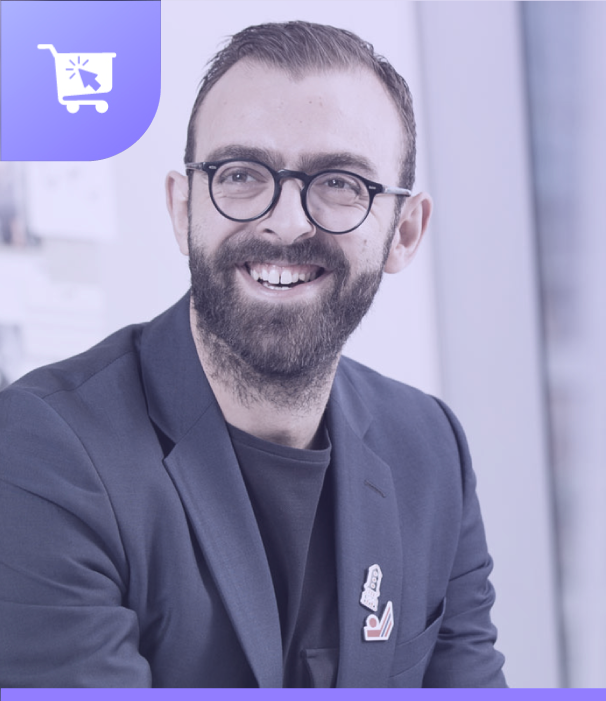
ABOUT THIS EPISODEIntroducing Giovanni Zaccariello who has dedicated more than two decades of his life in transforming the fashion industry. Currently, as the senior vice president of global visual experience at Coach, he leads various teams like visual merchandising, 3D creative studio, brand events, and digital experience.In this episode of The Retail Podcast by Vue.ai, Giovanni talks about how Coach shifted from modern to expressive luxury, focusing on customer obsession and glocalization. He explains the importance of visual experiences in retail and how Coach blends physical and digital elements to create an immersive store experience.
Episode Transcript
Krithika Anand: Hello! I'm excited to present a brand-new episode of The Retail
Podcast by Vue.ai. If you're just joining us, our podcast showcases trailblazers who are
making significant waves in the retail industry. We feature tech experts, dedicated
entrepreneurs, executives from enterprises and other remarkable individuals who share
their insights into the ever-evolving world of retail. Today, we have the honor of hosting
a true pioneer in the fashion and retail realm. Originating from Italy and holding a
master's degree in business and branding from Oxford, Giovanni has dedicated more
than two decades to transforming the fashion industry. His journey has taken him from
the United Kingdom to the Netherlands, from Hong Kong to New York, where he has
assumed key roles. Currently, as the Senior Vice President of Global Visual Experience,
he leads various teams such as Visual Merchandising, 3D Creative Studio, Brand
events and digital experience. Hi Giovanni, it's truly a pleasure to have you with us
today. Welcome to The Retail podcast by Vue.ai.
Giovanni Zaccariello: Thank you so much for having me. And hello everybody.
Krithika Anand: Okay, great. So, shall we get started?
Giovanni Zaccariello: Let's do it. Let's begin.
Krithika Anand: Awesome. So, tell us about where it all started and what inspired your
transition from you being a Visual Merchandiser to now a visual experience professional
at Coach?
Giovanni Zaccariello: You know, actually, I got into my job by accident. I know that
sounds that sounds like a cliche, but I was um, I was a, um, sales associate at Uniqlo,
back in the days when I was in a university, and I started to understand a little bit about
retail and a little bit about styling. And, uh, when the Japan team flew from Japan to the
UK for it is their opening a Uniqlo, I put my name down to do some extra hours, and I
just fell in love with the power of VM. Uh, it's like a silent seller somehow. Like there's so
much work that happens behind the scenes that people don't even know. Um, and cut a
long story short, when I left university, they offered me a full-time job into the team, and
somehow, I never looked back.
Krithika Anand: Right. And I'm sure it's been quite a journey for you. And, um, I'm sure
being in this industry for so long, you will agree that visual experience is an integral part
of retail. I mean, it can truly make or break a consumer's shopping journey, right? And I
remember talking to you for the first time, and you mentioned how Coach repositioned
the bags from modern luxury to expression luxury. And I'd love to know a little bit more
about that.
Giovanni Zaccariello: Yeah. Do you know what I think? I think especially I think since
the pandemic, I think we've been doing a lot of work to, um, just better connect with our
consumers on an emotional level, uh, versus just selling bags or just putting bags on a
shelf. I think those days are really over, especially now that consumers have learned
how to shop online. Right? But now they also want to go back to their stores. So, the
way of shopping is totally changed. And I think, uh, what we're doing in Coach is really
following the customers, really, uh, really putting the customer at the center of
everything. We actually use the word, uh, consumer obsession.
Krithika Anand: Hmm.
Giovanni Zaccariello: Because not only we are consumer focused, but we're obsessed
about them. Right? We need to move faster. Uh, we also need to be able to speak to
them differently depending on the geography, because we operate across so many
different regions. Uh, and each region is incredibly, incredibly different. So, um, and,
and yeah, I think that's really been the approach, uh, that's helped shaped, um, not just,
of course, the visual experience strategy, but most strategies where it comes to product
design, marketing, um, and things like that. So, um, we are on a journey of expressive
luxury. And I think, uh, the first chapter was our Lil Nas campaign "Courage to Be Real",
which launched, uh, over a year and a half ago now globally. Um, that was then
followed by "In My Tabby" uh, which was also quite successful. And we're now running,
uh, "Wear Your Shine" campaign, which is the third chapter of the "Courage to Be Real"
campaign. So very excited to see that customers are reacting to it. Um, not just in the
United States, but globally. And there is so much more to come.
Krithika Anand: Absolutely. You mentioned about customer experience, and I do have
some questions for you on that in just a bit. But before we jump into that, um, I'd like to
talk about visual experience. Tell us, Giovanni, what is visual experience and what ways
do you believe it kind of influences a consumer shopping experience.
Giovanni Zaccariello: So I feel. I feel like, uh, visual experience is a very broad topic,
right? I think one of the one of the ways we're approaching visual experience is through
the five senses. But so when I think about in the past, maybe only the sight was
important, right? Because you see something beautiful and you want to buy, you want
to shop. Right now we're approaching things to make things fully immersive. So we're
looking at things like sound. We're looking at things like touch. We're looking at things
like smell, for example. So we really want to make sure that you get fully immersed into
the experience. Some of those elements, you may not even notice they're there, but
somehow they touch you on an unconscious level, uh, from a customer perspective. So
that's a little bit of some of the work that we've been doing. So, at Coach for example,
we are looking at, of course, a great design. Uh, but that's not enough for us. So how
we activate the design as well is critically important. Like is there, you know, like, do we
open up the new store, for example, with a very special event that speaks to the local
customers? Uh, how do we kind of engage that community? Right. So, because having
a shiny object without the community, it's, It's I don't think it's successful. Right? I think
we want to have a great looking installation, but at the same time, a place where
consumers and also new consumers feel very comfortable coming to, um, even if they
don't shop Coach, at least they are consuming the brand and they're speaking the word.
And, you know, the, the philosophy of Coach. I think that's good enough. Um, so, uh, so
that's for me a little bit about the different approach that we have taken. Uh, of course,
the other big piece for me, um, as part of the visual experience strategy, is this idea of
blending physical and digital. We call it phygital, um, which maybe in the past and
during the pandemic for some brands was a little bit forced. Everybody's like, oh my
God, we have to go digital. I'm like, what? Does it really make sense? Is it helping the
consumer journey? So I think we kind of took a step back and just saying we are adding
digital when it makes sense. Uh, and we also adding digital when it makes the
consumer journey easier, faster, also more interesting, more engaging. I mean, adding
a screen doesn't mean it's better, right? And digital can mean so many things than just
screens. Uh, so we're looking at the hidden layer of digital, uh, that can help facilitate a
better customer experience. So again, there is a lot of things that happen behind the
scenes that when you look at some of those great installation you don't really see, but I
think they're fundamental to the success.
Krithika Anand: And I think it's safe to assume that there's truly so much to visual
experience. And I absolutely love what Coach does with it. Now that you've shared
about the digital aspect of a retail experience, maybe it's time to touch upon that a little
bit. Um, we hosted our flagship AI transformation event, REBUILD in Jamaica earlier
this year, and, uh, the head of digital for one of Middle East's largest marketplaces
shared about how their innovative approach sort of combines digital convenience to
achieve great in-store experiences. And I also recently read that Coach is tapping into
newer ways to engage with customers, and that includes Coach bringing in AR mirror
and AR storefront tech to the SoHo store in New York. I'm curious to know about this.
Tell us how Coach utilizes technology to elevate the visual aspects, um, of their
customer experience and overcoming challenges that may come with it.
Giovanni Zaccariello: Yeah. So, I think we are taking a little bit, maybe a different
approach to technology and digital than some of the other brands. What, what the word
that we use internally is experimentation and testing and learning. As you know,
technology changes and moves so fast.
Krithika Anand: Yeah.
Giovanni Zaccariello: Um, so we are looking at different projects that test and learn,
and then once we learn, then we roll out instead of really going big from the beginning.
Um, we really want to understand what the customer reaction is, especially for new
technology. Uh, I love that you noticed that ZERO10 partnership, uh, for our AR Magic
Mirror in SoHo, which was incredibly successful, uh, back in the summer. And stay
tuned, because we are rolling out something even bigger for the holiday season on the
next few weeks actually, uh, in five North America location. Um, what we saw there, we
really saw a much higher engagement of customers just coming by and coming through
the doors of the Coach store. It was really the first time that the AR technology was
actually used in a window, not in a fitting room or inside the store. Um, and it was just
something fantastical about it. Right. Like, there's one thing about seeing a real bag on
you, but you can go inside the store and wear the bag yourself. So what's the point?
Right? So, we were adding, um, more like 3D effects, for example. Um, the idea was
more about what, you know, who is your tabby? What is your tabby? So, depending on
the bag that you select, then you have a different kind of ornaments or outfit that
compliments your bag selection. Uh, and we're doing something special, um, for the
holiday season, depending on the gift that you pick for your loved ones. So what was
happening at the time was not only you could see the bag on you, but you could also
then share, uh, what you were wearing and how you were wearing it with your friends
and your loved ones. And somehow that created a little bit of a knock off effect of social
media, um, especially through Instagram and TikTok. And of course, it was just a great
thing to do with friends. Um, so we saw number one, higher traffic in the stores. Uh, but
the second one, we also saw like a much longer period of time of the customers
spending inside the store. So we had a mirror in the window and we had a mirror inside
the store, and we saw that the mirror in the window was highly impactful. Um, so, uh, so
the mirror and the window will basically get people to come into the store, but then the
mirror inside the store will let people convert. So they had different, somehow different
objectives. Uh, and we love that partnership with ZERO10. Of course, they're best in
class, uh, into this space and cannot wait for you guys to see what we're up to for
holiday. It's going to be really fun.
Krithika Anand: I'm very, very excited about this. And, um, and, um, yeah, I mean,
going back to the visual experience part, right? Coach takes great pride in the approach
to visual experience itself. And how does visual experience impact a customer shopping
journey? Um, I'm very, very interested to know the key aspects of visual experience that
can either enhance or detract from their overall shopping experience. What are your
thoughts on this?
Giovanni Zaccariello: Yeah. So I guess and I know I mentioned already like the focus
around the five senses, I think that's definitely critical for us. Uh, the other big piece for
me, uh, that you and I talked about a little bit before, is this idea of glocalization. Yeah.
So I know that many brands kind of like do a big cut and paste globally. I think, you
know, we have really learned how to maybe have a global, consistent message and a
global consistent look and feel when it comes to experience, but really tailor the
experience of the local customers and the local nuances. Uh, and again, you know,
more than me that just by moving from Japan to China, you have a totally different
customer base. Uh, and I think at Coach we really take pride in taking the time to
understand the local customer and really approaching the experience to tailor it to them.
So, um, just an example. For example, we have launched some local pop ups across
China or across Japan, which are totally different, like in Japan. Uh, we launched two
years ago like something called Coach Mart, um, which was basically an amplification of
a, of the mart. You know, the mart is like the 911 7-Eleven or the Coach supermarket is
all across Japan, and we converted them to a Coach store, for example.
Krithika Anand: Oh wow!
Giovanni Zaccariello: Or another example is when we launched our tabby, uh, across
the world this spring-summer, um, we actually took over a temple in Harajuku in Tokyo.
And instead of going up with a global creative, we customized, uh, the offering, uh,
through, uh, for example, like a local tea house, uh, seating arrangement or even like
local ice cream that was more relevant to the Japan customer. So again, the look and
feel was very consistent, but the adaptation to the country was incredibly impactful. So
again, it's a lot of work. Um, but we have some really good, talented teams around the
world. And I think that's been part of the success story, uh, as well. And I have many,
many, many, many more examples of what this could be and look like. So but this gives
a little bit of, um, of an answer to your question.
Krithika Anand: Absolutely. And I'm absolutely a huge fan of Coach's take on Visual
Merchandising. And, um, we've already spoken about Coachtopia, but I think I should
bring this up here. Um, my experience at Coachtopia in Singapore was a dream come
true for any ardent Coach fan, right? Um, it was a journey through the brand's history,
craftsmanship and innovation, and it left me with a deeper appreciation for the brand
and a memory that I will treasure for years to come. I'm really quite intrigued about this.
Uh, intrigued. Uh, let's go over that again. I'm quite intrigued. Let's go over that again.
I'm quite intrigued about this. Could you share more about Coachtopia and the creative
concepts that inspired this distinctive store setup?
Giovanni Zaccariello: Yes. So Coachtopia just launched less than a year ago. Our first
installation was in London in Suffragette, uh, where we previewed the collection and,
uh, Singapore shophouse which is the next stop really into the, into this conversation.
Uh, Coachtopia is really a sub brand of Coach that it's 100% circular. Uh, this means
that, you know, instead of, you know, in the traditional fashion houses, the designers
does a design, then, you know, the product team goes and buys the raw materials. Here
we're basically looking at we're looking at scrap. So, we're making things from things
that are not going to be used. Uh, this is from a design perspective. So, what we have
done from a VM standpoint, we're taking the same approach. So instead of building new
elements, um, all the things that you saw in Singapore shophouse, for example, were
already made, uh, and they were made modular. They were made circular means that
after the Singapore shophouse installation comes down, they would be reduced in
different installations. So, uh, what you saw there, for example, was the inaugural, uh,
all the rises were made out of, uh, Coach scrap leather. This means that we collected all
the leathers from all the factories and then created the rises and, um, elements and
platters and trays out of them. Uh, even the Neons that you saw in Singapore
shophouse were not new Neons. They were made out of scrap Neons that were
supposed to be discarded, for example. Even things like hangers, bus forms, all
elements within the experience were incredibly circular. Um, and we were celebrating
circular in a very big way in Singapore shophouse because we took the word circular so
literal that even when you walk in, you had the circular. Do you remember you had like a
little circle where you actually shop? Um, and then because it's a very Utopian brand,
uh, we also took the blue in the clouds to the next level. So, we had cloud prints at the
front. Uh, but we also had a, um, Coachtopia cloud experience on the top floor where,
um, you can really become a cloud in the digital world through not only through the
screen, but also through your phone, and you can engage with your friends. So again,
merging that physical, um, with the digital experience, we actually just launched
Coachtopia in China yesterday. Um, the Coach, uh, at the International Expo in
Shanghai, uh, and Coachtopia will be launching in China stores in the in the second half
of the year. So, we're very excited about it.
Krithika Anand: Lovely. And I think combining visual, visually appealing experiences
with sustainability is really the way to go. And Coachtopia is indeed an experience. I can
vouch for that. Um, with all the effort that's gone into Coach Play and Coachtopia, it
makes me think that the brand always thinks about its customers. And that's what we
spoke about, um, earlier as well. Right? With physical experiences being a strong
heritage for the brand, how does Coach ensure that it remains in sync with evolving
consumer trends? And how does this affect your strategy for designing visual
experiences? Tell us about Coach's customer first approach and the experimenting that
goes behind it.
Giovanni Zaccariello: Yeah. So this is something I was talking about at the beginning.
I think there is definitely a level of, uh, consumer obsession. Of course, we work very
closely with our strategy team and our consumer insights team here at Coach. Uh, and,
you know, believe it or not, before we actually introduced the expressive luxury
positioning, we traveled across the US and kind of really met customers in their homes,
um, Gen Z and young millennials to really understand what was their perception of the
brand. Uh, what did they think about the brand? Of course, they did not know we were
from Coach, so it was incredibly unbiased. Um, and we learned so much from them. So
now we are taking all of those learnings into account, not just in our incredible new
marketing campaigns, but also our new positioning of our VM strategy. Um, this
happened in the US, of course. Similar work happened then around the world, in Japan,
in Korea, uh, and most recently in China. Uh, and again, it's always about really, It's a
little bit of a blend. We use the word glocal, so there is more of a global vision. But then
there is a local approach. So really having an idea, but then really workshopping it with
the with the regional marketing teams and creative teams to really define and make
sure it works for the consumer. Again, there could be some small nuances even across
Asia, that can be quite impactful. But I would say customer is king. I should not say
customer, I should say consumer. The consumer is king because again, it's not just
about them really just shopping with us. It's about them spending time with us or even
just shopping with us online, looking them up on our Instagram. That's good enough.
Mhm.
Krithika Anand: Incredible this is. And um consumers are definitely at the center of
attention here with glocalization I'm sure a lot goes into ensuring the staff, um, in each
geo understands the nuances that come with visually presenting the product in the way
that you want. So, let's talk about how Coach provides training to its staff to ensure they
can effectively bring the brand's visual experience vision to life. And I think the
successful implementation of visual experiences frequently depends on the skills and
knowledge of the in-store personnel. What, what are your thoughts on this?
Giovanni Zaccariello: Yeah. You, you, you definitely asking a really good question
here because at the end of the day, we can have such a great design, but if it's not
executed correctly, then we're back to square one, right? So, um, first and foremost, we
have an incredibly talented VM team here in New York that kind of sets direction. Uh,
we have monthly direction that come out for all channels of distribution. So whether it's
retail, whether it's outlet, whether it's the wholesale channel. And then we have really
strong VM teams around the world. They're based in their own geo, um, markets,
whether it's the Europe team, the US team, the China team, Korea, Japan, Singapore,
you name it. Uh, we have, uh, we have, um, people on the ground that can really
understand and make it happen. Of course, we do not have VMs in every store because
we have over a thousand locations globally. But what we do is like train the trainer,
right? So we make sure that the direction is very clear, um, that the direction is easy to
understand for somebody that is not in the VM world. Right. Like if I think about a store
manager, if I think about a sales associate, uh, they don't have the same background
and my team has. So we try and break down things to, to be very simple to understand.
And I think we have created a lot of training programs, whether it comes to, for example,
how do you flow a store, how do you zone the store, uh, approach to styling, approach
to merchandising. So, we have a core package of training, and then we have monthly
guidelines that support all the newness that comes into the store. So, I think it's a little
bit of a combination. Um, and to be honest with you, I think we never stop training. Uh,
it's really an ongoing process. Um, and then we bring teams together, like, every time
when I travel, you know, I'm always on the road. Um, I always bring people together,
and I make sure that I have. I kind of make the best out of the time in the field. Even
when anyone from the corporate team travels, we try and bring more people together so
they can actually learn. Uh, and then they bring the learnings back to their store, and
then the store brings learnings back to their staff. So it's a little bit of a chain reaction
there. So I think we have a pretty good system. I think the store staff are definitely at the
heart of this because they are they are a brand ambassadors. They spend time with the
customer every single day. So, we want to make sure that they, they breed the Coach
values inside out.
Krithika Anand: Fantastic. And that's really incredible. And finally, what areas does the
Coach intend to explore when it comes to visual innovation?
Giovanni Zaccariello: That's a very big question. I'm not sure I can share the actual
answer, but I'll try and be a little vague. Is that okay?
Krithika Anand: Yeah.
Giovanni Zaccariello: Uh, so, um, as I mentioned before, I think, uh, my team has
definitely learn how to test and learn since the pandemic. Uh, so we are going to
continue to experiment. Uh, but. With the consumer at the heart of it. I think that's
definitely for me, a Key. As part of our long, long-term strategy, and also with this idea
of like global-loc, I think those are, for me, the two new ones that can definitely set us
apart, uh, from the rest of the industry. And then of course, community, community,
community. I think that's definitely key because we want to bring people together. At the
end of the day, Coach is that type of brand. Right? We are, uh, we are the brand for
everybody. Uh, and I think I love to see some of those stories when you have the
mother that has a Coach bag, and now you also have the daughter that have the Coach
bag, and they go out together. I think that's, for me the biggest form of success. Uh, so
and we can only do that by really understanding both. Right. So, uh, but lots more to
come from us, uh, in this vein of experimentation. That's the keyword for me.
Krithika Anand: And that sounds lovely, Giovanni. And we wish you the very best in
this journey. Um, I think it's time for a quick rapid fire. Are you ready for this?
Giovanni Zaccariello: I am ready, I hope I am. Let's see.
Krithika Anand: Let's get started then. What's your favorite travel destination since you
travel a lot?
Giovanni Zaccariello: Uh, you know, it's funny, I was telling a friend of mine that I've
not been to Mars, so maybe the next place would be Mars if I can afford it.
Krithika Anand: Oh, lovely. Are you a tea or a coffee person?
Giovanni Zaccariello: Oh my God, coffee. I have way too much coffee. My team
literally jokes about it because by the time it's 8 a.m., I've had four coffees. I'm a, I'm a
morning bird. So, I mean, I just had, this is my third and it's 9:30.
Krithika Anand: Oh my God. Okay, so what's your go-to comfort food?
Giovanni Zaccariello: Italian, of course.
Krithika Anand: Lovely. Beach vacation or mountain getaway?
Giovanni Zaccariello: I would say mountain. Yeah, I love the the hikes. I love the
walks, I love the views, I love nature.
Krithika Anand: Lovely. What's your all time favorite book?
Giovanni Zaccariello: Well, I've just, uh, finished, uh, another leadership book. I'm
obsessed with leadership book. Motivational books. I mean, some people think I could
be a motivational speaker one day, but, uh, I love everything about leadership and
people management and that side of things. So I know it feels a little nerdy, but that's it.
Krithika Anand: Lovely. And who is your biggest inspiration?
Giovanni Zaccariello: I think my dad, I think my dad, I think my dad is the reason why
I'm here. I think my dad is the reason why I keep doing what I'm doing. Yeah, he pushed
me out of Italy at a young age and he still believes in me. So yeah, I would say my dad.
Krithika Anand: Amazing. And that brings us to the end of this episode, Giovanni.
Thank you so much for taking the time to speak with us today. Any final remarks or
thoughts, um, you'd like to leave to our audience with today?
Giovanni Zaccariello: Maybe. Maybe one, you know. You know, I know, I know the,
you know, the environment is quite competitive out there. But, you know, one of the
things I always wake up in the morning and think about, like, have fun along the way.
Right? I think what we do is so it just brings so much joy to consumer, especially when
you connect with them emotionally. But have fun with it, right? Have fun with it. Like or
make mistakes, take risks. Uh, do things have not been done before, like go through the
uncharted territory? I think that's where experimentation innovation is all about. Uh, but I
definitely take pride in the fun piece of it. Uh, and also really spending the time with the
team. So it is hard work, but it's also fun work.
Krithika Anand: Amazing. Thank you so much for sharing your thoughts with us.
Giovanni Zaccariello: Thank you so much for having me. And, uh, yeah, all the best.
Krithika Anand: Great. We'll be back with more episodes of The Retail Podcast by
Vue.ai. Don't miss out on this immersive journey through the future of retail. Find The
Retail Podcast by Vue.ai on our website or wherever you listen to your podcasts and
stay on top of the game. Until next time, I'm your host, Krithika Anand. Bye.
Giovanni Zaccariello: All the best. And thank you for for this. Uh, and but I was going
to show you something. Yeah. So we talked about sap. You look at what my team gave
me, I got a mini micro bag. It's metal.
Krithika Anand: Oh, lovely. It is so cute.
Giovanni Zaccariello: A little box. So when I arrived in China three weeks ago, I got
this big unveiling in my room. And it was that so, so cute. So lovely. That's what I mean
about having fun, right? Like, we work so hard. Uh, and I think the fun component
sometimes is missing because the work is so political and so draining and the flying and
but it's it's good stuff. Anyway, have a good day and we'll keep in touch. Okay. Thank
you.
Krithika Anand: Thank you so much.